
One of the very important topics, maybe even the topic of our generation is sustainability. The world is currently facing an unprecedented energy crisis coupled with a threat to the existence of the delicate ecosystem that allows us to live on this planet. With the increase in population, growth of industry and ever increasing use of products and global supply chains to support this, it is of utmost importance to ensure we are constantly thinking of and making informed decisions in every aspect of our business and personal life.
Sustainability as defined by the United Nations World Commission on Environment and Development, is “development that meets the needs of the present without compromising the ability of future generations to meet their own needs.” It is important to understand and accept businesses and organisation can have a negative impact on the environment through direct or indirect carbon production, waste generation and damage to shared resources such as water. The alignment between corporate performance and social responsibility has to be a key aspect of governance of every business.
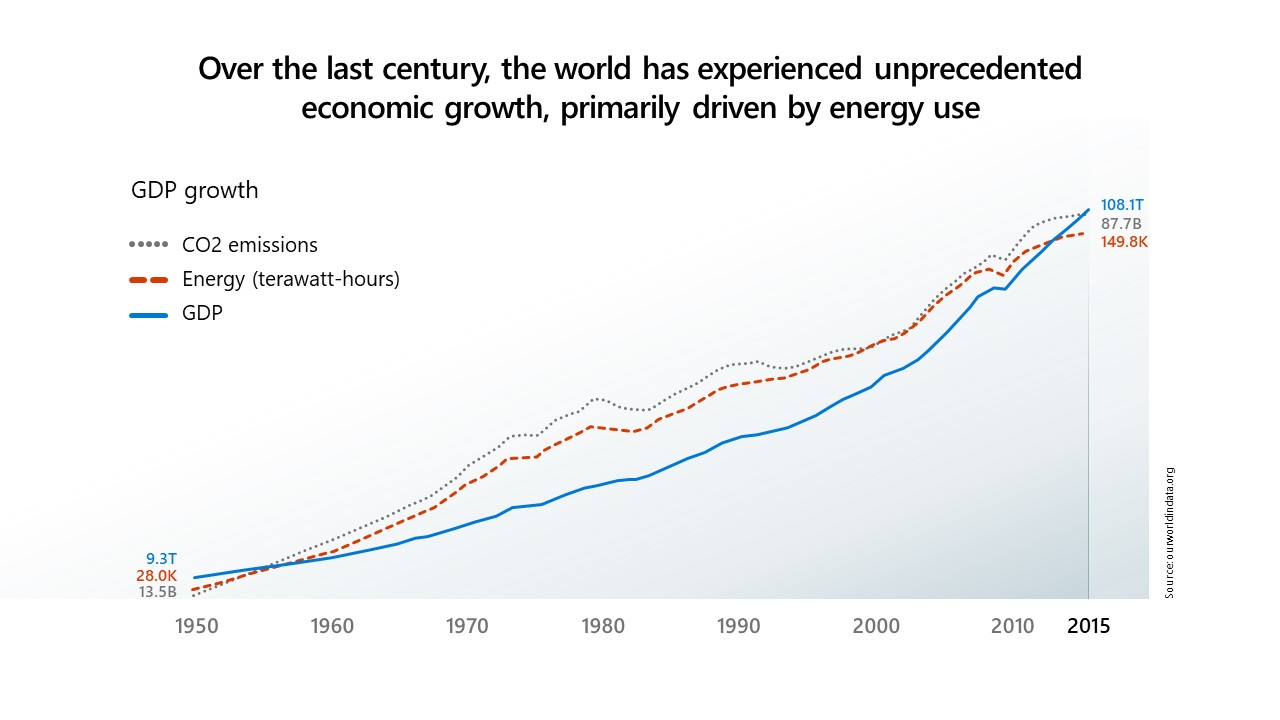
Over the past century, the world has seen immense economic growth and this has been driven by the use of energy. This has resulted in an ever increasing amount of carbon emissions.
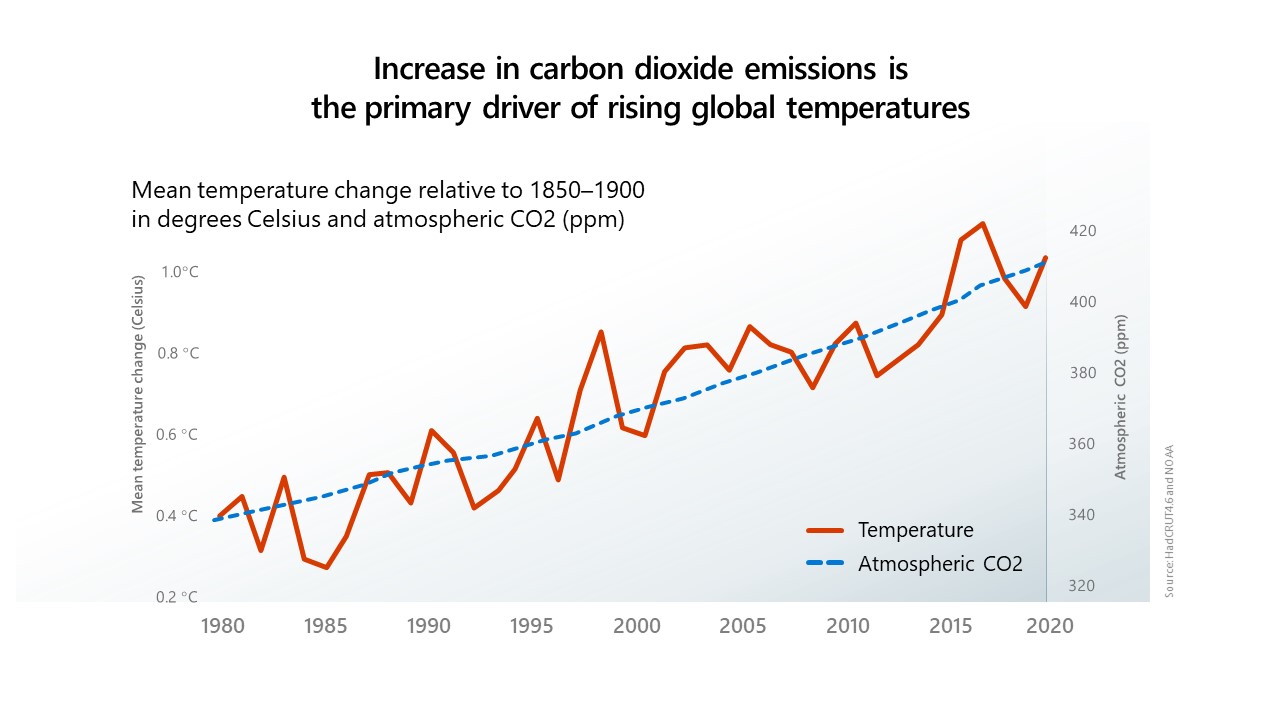
This increase of CO2 emissions has been the main drive in raising global temperatures.
When focusing on environmental impacts, you should understand how these impacts are typically accounted for and the follow-on impacts to your organisation’s own emissions accounting. The Greenhouse Gas Protocol organises carbon emissions into the following scopes, along with relevant emission examples within each scope for a cloud provider:
- Scope 1: All direct emissions from the activities of an organisation or under its control. For example, fuel combustion by data centre backup generators.
- Scope 2: Indirect emissions from electricity purchased and used to power data centres and other facilities. For example, emissions from commercial power generation.
- Scope 3: All other indirect emissions from activities of an organisation from sources it doesn’t control. AWS examples include emissions related to data centre construction, and the manufacture and transportation of IT hardware deployed in data centres.
Cloud Data Centres vs Self run Data centres
Data centres, which are the backbone of cloud computing, require a significant amount of energy to run. According to a 2018 study, data centres consumed about 3% of the world’s electricity, and that number is expected to grow in the coming years. This energy consumption results in the release of large amounts of carbon dioxide and other greenhouse gases into the atmosphere, contributing to climate change. By 2040, data centres will account for over 14% of the world’s GHG emissions. As data centres operate 24 hours a day, seven days a week, they require enormous amounts of energy to operate and keep the servers cool. Over 40% of the total electricity consumption in data centres goes towards cooling the servers and IT equipment.
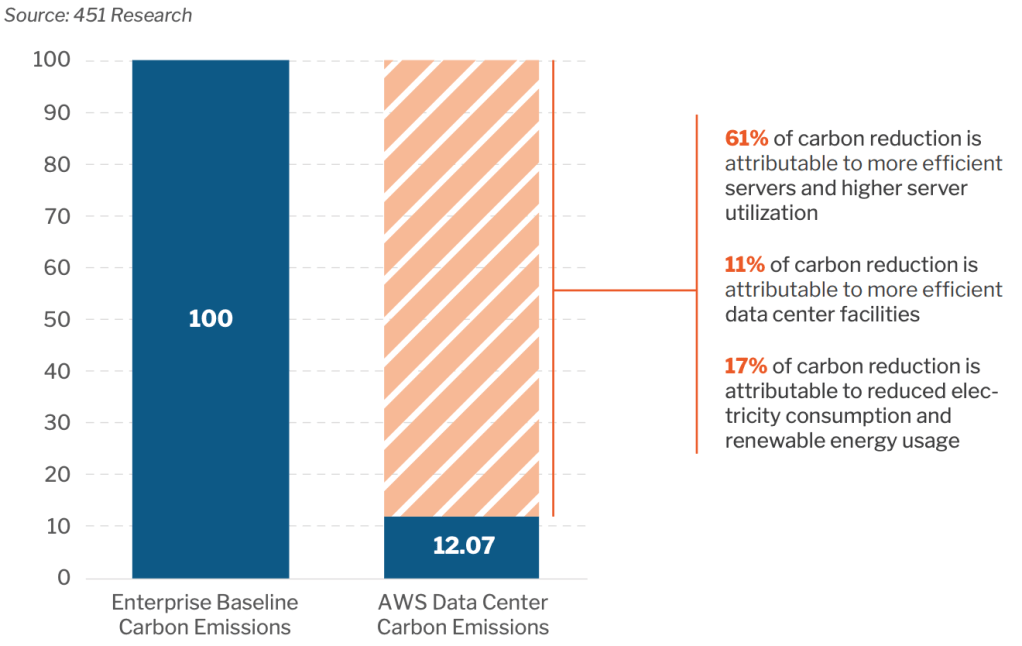
This is where data centres run by cloud providers are game changers. According to research conducted by the 451 Research Institute, AWS’s infrastructure is 3.6 times more energy efficient than the median of the surveyed US enterprise data centres. More than two-thirds of this advantage is attributable to the combination of a more energy efficient server population and much higher server utilisation. AWS data centres are also more energy efficient than enterprise sites due to comprehensive efficiency programs that touch every facet of the facility. When we factor in the carbon intensity of consumed electricity and renewable energy purchases, which reduce associated carbon emissions, AWS performs the same task with an 88% lower carbon footprint.
Data centres use almost as much power for non computing tasks (ventilation, cooling systems etc) as for running instances and networking hardware. This is another area where Cloud providers have been able to make a huge impact in their data centres. Google has been able to reduce this overhead to 11%. Another area where Google has been able to make an impact is their cooling systems. Google reduced the electricity required to cool their servers by 30%. Moreover, in comparison, they are able to provide 7 times the computational power with the same amount of electrical power.
According to research conducted by the Berkeley Lab and Northwestern University, moving to cloud can reduce energy consumption by 87%.
Cloud and Climate Pledges
Cloud providers such as AWS, Google and Microsoft have committed to take steps to reduce their carbon footprint and combat climate change. Amazon co founded the Climate pledge which is a commitment to reach net-zero carbon emissions by 2040—10 years ahead of the Paris Agreement. By 2020 AWS reached 65% renewable energy across the business (up from 42% in 2019) and is on track to be powered by 100% renewable energy by 2025.
On a similar note Microsoft has committed to be carbon negative by 2030. By 2050 Microsoft will also remove from the environment all the carbon the company has emitted either directly or by electrical consumption since it was founded in 1975.
In this space, Google is probably the leader in terms of its commitments and achievements. Google was the first major company to be carbon neutral in 2007. In 2017, Google has achieved the goal of being 100% powered by renewable energy, its data centres are powered by wind farms and solar. By 2020 google had neutralised its entire legacy of carbon emissions. They are not stopping there, Google are committed to decarbonise their entire energy consumption by 2030, this means running carbon free 24/7. They are not stopping there, Google will replenish 120% of the water they consume by 2030.
Shared Sustainability Model and the rise of the Chief Sustainability Officer
Similar to the Shared Responsibility Model (which I have talked about in detail in a previous post), the Shared Sustainability Model is also of utmost importance to understand and operate in cloud environments in a sustainable way. Environmental sustainability is the responsibility of the customer and the cloud provider and thus needs to be actively considered at all stages of the solution lifecycle.
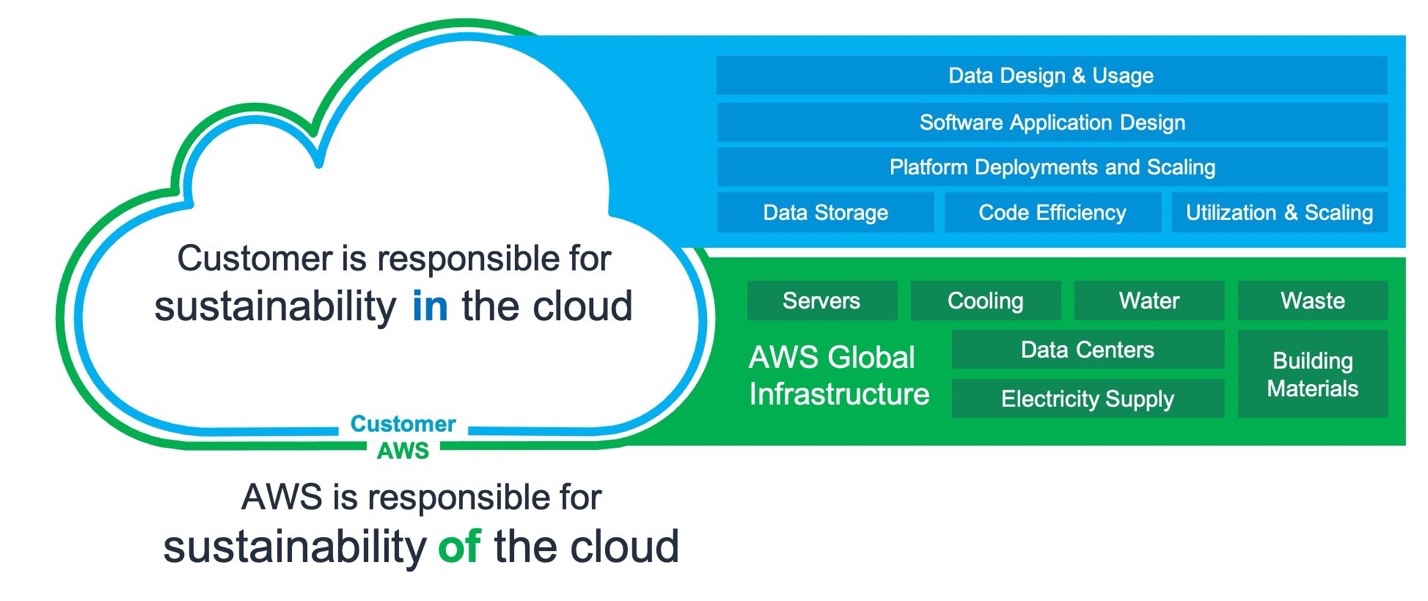
Cloud providers have a lower carbon footprint and are more energy efficient than typical on-premises alternatives because they invest in efficient power and cooling technology, operate energy efficient server populations, and achieve high server utilisation rates.
Sustainability in the cloud is a continuous effort focused primarily on energy reduction and efficiency across all components of a workload by achieving the maximum benefit from the resources provisioned and minimising the total resources required. This effort can range from the initial selection of an efficient programming language, adoption of modern algorithms, use of efficient data storage techniques, deploying to correctly sized and efficient compute infrastructure, and minimising requirements for high-powered end-user hardware.
As I stated earlier, Sustainability has to be continuously reevaluated in a cloud environment. With each iterations, new services and new capabilities are being released by the cloud providers and this precipitates the need to re assess every architecture. This is where companies have to create the new role of Chief Sustainability Officer (CSO). Not only should the CSO look at the longterm sustainability goals of the company but should also create processes and policies that enable, empower and mandate the teams to think about and assess architectures from a sustainable practice perspective.
In order to help with this cloud providers have released a number of best practices and incorporated sustainability into the well architected framework. You can view these here:
- AWS: Sustainability Best Practices and Well Architected Review
- Google Cloud: Best Practices
- Azure: Best Practices
I hope you all enjoyed this and if you have any questions or comments please let me know below.
 blog.aligardezi.com